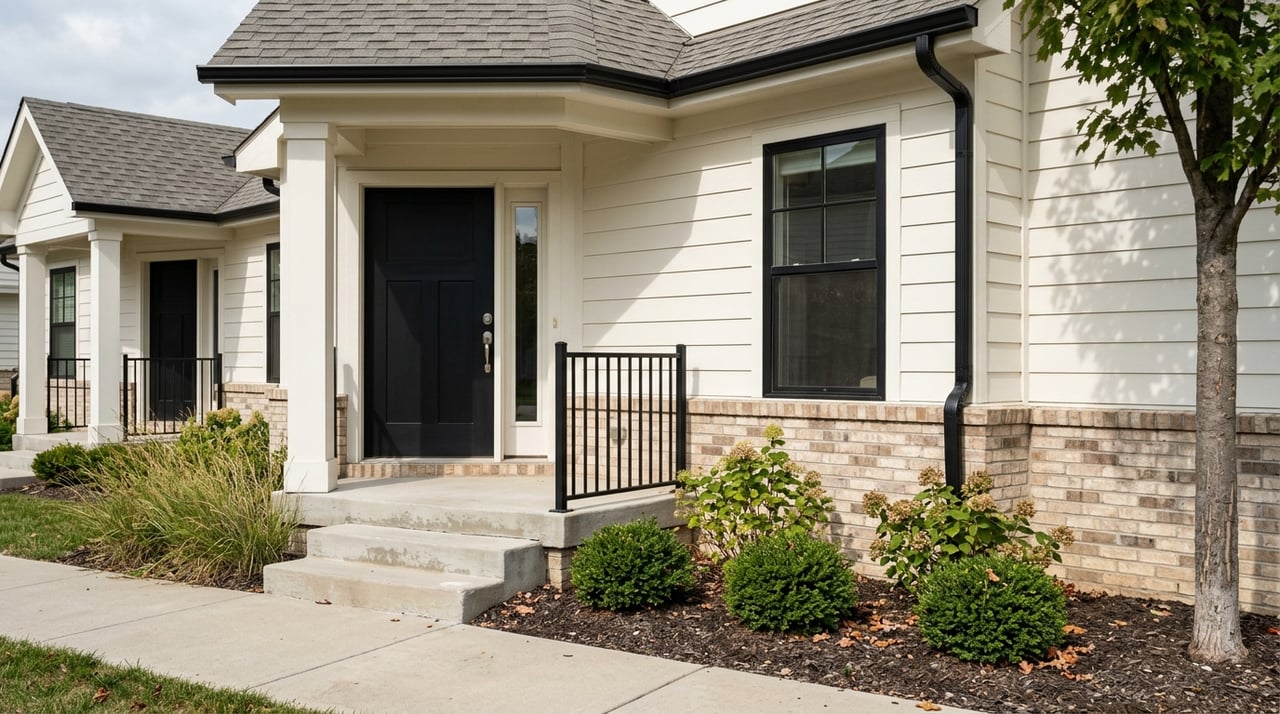
If you are deciding between a townhome and a single-family home in Coralville, the right answer is usually less about the list price and more about how you want to live each month. You may be balancing budget, upkeep, privacy, and future flexibility all at once. The good news is that Coralville gives you solid options in both categories, but the tradeoffs are real. Here is how to compare them clearly so you can choose with confidence.
Why this choice matters in Coralville
Coralville is not a one-format housing market. According to Redfin market data for Coralville, the median sale price was $359,440 in March 2026, while the Census Bureau’s 2020 to 2024 ACS reported a median owner-occupied value of $298,500 and median monthly owner costs with a mortgage of $1,874. That gap is one reason your monthly payment and ownership costs deserve close attention.
The city also has a mixed ownership pattern. The same Redfin and ACS data show an owner-occupied housing rate of 55.9%, which means Coralville includes a blend of owners and renters rather than one dominant housing type. For you as a buyer, that means the better fit often comes down to your lifestyle, not just what is most common.
Start with monthly cost
A townhome may look more affordable at first glance, but you need to compare the full monthly cost. The Consumer Financial Protection Bureau explains that HOA dues are usually separate from your mortgage payment and can range from a few hundred dollars a month to more than $1,000 a month.
That means a lower purchase price does not always equal a lower monthly commitment. If you are comparing a townhome to a detached house, look at principal, interest, taxes, insurance, and HOA dues together. A fair comparison should reflect the total cost of ownership, not just the mortgage.
Questions to ask about costs
- What is the estimated full monthly payment for each option?
- What do HOA dues actually cover?
- Are there transfer fees or other association charges due at closing?
- Could special assessments increase your costs later?
Compare maintenance realistically
One of the biggest practical differences is who handles exterior work. In a single-family home, more of that work usually falls directly on you. In Coralville, property owners must clear public sidewalks and curb ramps within 24 hours after snow or ice ends, keep grass and weeds at or below 10 inches, and trim tree and shrub branches to maintain required clearance above sidewalks and streets, according to the city’s snow removal and property maintenance rules.
For some buyers, that responsibility feels manageable and worth it. For others, especially if you travel often, want lower day-to-day upkeep, or simply do not enjoy outdoor chores, a townhome can be appealing if the association handles part of that work.
Townhome maintenance is not free
A townhome can reduce your direct exterior workload, but it does not eliminate maintenance. It shifts some of it into shared responsibility through the HOA. Coralville’s Community Development Department oversees zoning, building services, and housing-related code enforcement, and the city adopted the 2024 International Property Maintenance Code effective October 31, 2025.
In other words, the choice is usually not maintenance versus no maintenance. It is owner-managed upkeep versus association-managed upkeep. That distinction matters when you decide how much control and responsibility you want.
Think about space and privacy
Your daily comfort matters just as much as your budget. Coralville planning documents show that detached single-family homes and attached forms like townhomes and rowhouses are treated differently, with attached homes generally allowed at tighter separations and different open-space and setback patterns. In simple terms, townhomes are often built closer together and usually have less private yard space than detached houses, based on the city’s planned unit development framework.
That does not make one better than the other. It just means you should be honest about what feels comfortable to you. If you want more separation, more outdoor area, or fewer shared walls, a single-family home may be the stronger fit. If you prefer a simpler footprint and do not need much yard space, a townhome may check the right boxes.
Review HOA rules before you commit
If you are considering a townhome, the HOA documents are not just paperwork. They are part of the property itself. Under Iowa Code Chapter 499C, associations must provide organizational documents, bylaws, rules, and recent meeting minutes and financial reports within 10 business days of a request from an owner or the owner’s authorized agent.
Those records can answer some of your most important questions. You can confirm what the dues cover, how landscaping and snow removal are handled, whether there are parking or pet rules, and whether the association has a history of special assessments or major repairs.
HOA due diligence checklist
Before you move forward on a townhome, ask to review:
- Declaration and bylaws
- Current HOA rules
- Recent meeting minutes
- Financial reports and reserve information
- Insurance responsibilities
- Any pending major repair issues
- Rental and leasing restrictions
Check rental flexibility early
Even if you plan to live in the home for years, future flexibility matters. Coralville requires rental permits for leased residential property and also requires permits, housing-safety compliance, and hotel or motel tax for short-term rentals. The city specifically advises buyers to check HOA or condo covenants for rental and short-term-rental restrictions on its rental housing page.
This is important because your plans can change. You might relocate, keep the property as an investment, or want the option to rent it later. A single-family home may still be subject to city permitting rules, but a townhome community may add another layer of restrictions through the HOA.
Understand financing and resale risk
With a single-family home, financing and resale usually focus mostly on the individual property. With an attached home, the project itself can affect your financing options. Fannie Mae notes that condo-project eligibility can be affected by critical repairs, insufficient master property insurance, pending significant litigation, and project characteristics tied to hotel, motel, or daily or short-term rental use.
That does not mean townhomes are a risky choice by default. It does mean you should ask more questions about the association’s financial health, insurance coverage, and maintenance history. In attached communities, deferred maintenance can become a shared issue instead of an individual one.
Why lender timing matters
The financing process may also move differently depending on the property type. The CFPB’s preapproval guidance explains that preapproval letters are tentative, often expire in 30 to 60 days, and may require different documentation depending on the lender.
If you are buying a townhome or condo-style property, ask your lender early whether the specific project is financeable and what documents they will need. That step can help you avoid delays late in the process.
Before closing, the CFPB also recommends reviewing your Closing Disclosure at least three business days in advance and asking for other closing documents early. For HOA properties, that is a smart time to recheck dues, transfer fees, insurance obligations, and use restrictions.
When a townhome may fit best
A townhome may be a strong choice in Coralville if you:
- Want less direct exterior upkeep
- Prefer a smaller yard or limited outdoor responsibilities
- Are comfortable with HOA rules and shared decision-making
- Value convenience more than maximum privacy
- Are willing to review association finances and documents carefully
For many buyers, that combination works well. It can offer a simpler ownership experience, as long as you understand the dues, rules, and project-level risks ahead of time.
When a single-family home may fit best
A single-family home may be a stronger fit if you:
- Want more autonomy over the property
- Prefer more outdoor space and separation from neighbors
- Do not want HOA oversight shaping day-to-day decisions
- Are comfortable managing snow, lawn, and exterior upkeep yourself
- Want to reduce exposure to association-level financing or reserve issues
In Coralville, that added independence can be especially meaningful if yard space, privacy, and control are high on your list.
The best choice is the one that matches your life
In Coralville, the townhome versus single-family decision is really a choice about cost structure, responsibility, and flexibility. Townhomes often work best for buyers who value convenience and reduced direct exterior work, while single-family homes often work best for buyers who want more autonomy, more outdoor space, and fewer project-level variables.
If you want help comparing specific Coralville properties, reviewing the real monthly cost, and spotting the details that matter before you offer, Blank & McCune Real Estate can help you sort through the options with local insight and practical guidance.
FAQs
What is the biggest difference between a Coralville townhome and a single-family home?
- The biggest difference is usually the balance between convenience and control. Townhomes often include association-managed exterior responsibilities and shared rules, while single-family homes usually offer more privacy, yard space, and owner control.
Are HOA dues included in a Coralville townhome mortgage payment?
- Usually not. The CFPB explains that HOA dues are typically paid separately from the mortgage, so you should compare the full monthly cost when evaluating a townhome.
Do Coralville single-family homeowners handle their own snow and lawn care?
- In many cases, yes. Coralville property owners are responsible for meeting city rules on sidewalk snow removal, grass and weed height, and tree and shrub clearance, as outlined by the city’s property maintenance requirements.
Can you rent out a Coralville townhome later?
- Maybe, but you need to check both city rules and the association documents. Coralville requires rental permits for leased residential property and warns buyers to verify HOA or condo restrictions on rentals and short-term rentals through the city’s rental housing guidance.
Can financing be harder for a Coralville townhome than for a single-family home?
- It can be, depending on the project. Fannie Mae notes that project-level issues such as critical repairs, insurance concerns, litigation, or short-term-rental characteristics can affect loan eligibility for attached properties.